
Setting goals with your team is one of the most effective ways to raise engagement, lift team performance and help each person reach their potential. Knowing how to do it well is another matter. Which process works best? How do you make goals measurable? And how do you follow progress and help people actually hit their targets?
Objectives and key results (OKRs) are one of the most widely used answers. This guide explains how the framework works and how to write OKRs that give you and your team a solid structure from the first goal-setting conversation to the final check-in.
What this guide covers
- Goal-setting frameworks: what they are and why they matter
- How OKRs work
- Where OKRs come from
- Writing an OKR, with an example
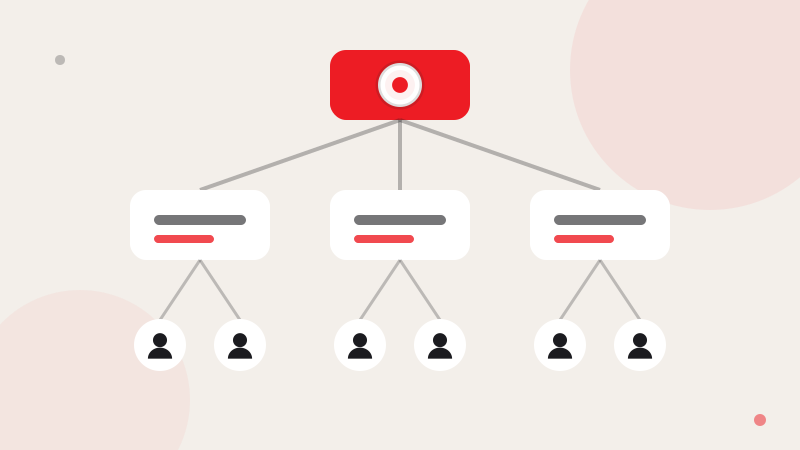
A goal-setting framework is a structured method for defining goals and working toward them. At work, it makes sure individuals, managers and the organization as a whole are pulling toward the same business priorities.
Setting goals with employees pays off in several ways:
- Better alignment. When individual goals connect to team objectives, everyone knows how their work fits into the bigger picture.
- A sense of direction. People who know where they're headed, and have the freedom to decide how to get there, find more meaning in their work.
- Higher engagement. A goal that matters to someone personally keeps them motivated and productive day to day.
- Stronger retention. Employees who see that you're investing in their growth, with real opportunities and support, are more likely to stay.
No single framework suits every team, but OKRs are a strong place to start. Each goal pairs a clear objective with a few measurable key results, so everyone knows what success looks like.
Begin with a small number of OKRs per quarter, review them regularly and adapt as you go.
OKRs, short for objectives and key results, grew out of Peter Drucker's well-known management by objectives approach. At Intel in the 1970s, Andy Grove built on Drucker's idea by pairing each objective with measurable key results. Linking goals to concrete, trackable measures made it easier for people to monitor their own progress and take ownership of results.
The framework reached a much wider audience after investor John Doerr, who had learned it at Intel, introduced it to Google in 1999. Doerr later described the approach in his book Measure What Matters.
OKRs have helped lead us to 10x growth, many times over. They've helped make our crazily bold mission of 'organizing the world's information' perhaps even achievable. They've kept me and the rest of the company on time and on track when it mattered the most.

Google co-founder, quoted in John Doerr's Measure What Matters
Decades on, OKRs remain popular because they're easy to grasp and work at every level, from the whole company down to a single employee. The focus isn't only on the final objective but also on the measurable, trackable milestones, the key results, that show you're getting there.
Writing an OKR, with an example
Start by naming the objective you want to achieve, then define the key results that will show whether you've succeeded.
A handy formula: "I will [objective], measured by [key result]."
Example: I will make our onboarding experience more welcoming this quarter, measured by a new-hire satisfaction score of at least 4 out of 5, every new hire having a 30-day check-in with their manager, and a buddy assigned to 100% of new starters.